
Description
Nagy, B., A.C. Manda & E.J.W.M.N. Vreven. 2026. Nothobranchius
poppi, a new species of seasonal killifish (Cyprinodontiformes:
Nothobranchiidae) from ephemeral wetlands of the lower Luapula
River floodplain (upper Congo drainage: DR Congo). Ichthyol.
Explor. Freshwaters, 1204: 22 pp.
Abstract:
Nothobranchius poppi, new species, is described from ephemeral
wetlands in the upper Lubi River system, a left bank affluent of the
lower Luapula River drainage (upper Congo River drainage) in the
Democratic Republic of the Congo. It is identified as belonging to
the N. brieni species group that is endemic to the upper Congo
River and upper and middle Zambezi River drainages in south-
central Africa. Members of this species group are char-acterised by
a combination of colour pattern features in the male: light blue
scales with broad brown-red borders creating a reticulated pattern
on body; brown-red spots on proximal portion of median fins; and,
caudal and anal fins with either a pattern of dark distal and light
subdistal bands or, on the caudal fin an overlaying light blue
iridescent distal band. Nothobranchius poppi is distinguished from
all other members of this species group by: (i) a unique colour
pattern in the male combining median fins with an irregular red-
brown reticulated pattern and an overlaying light blue iridescent
distal band; an anal fin lacking a subdistal band but having, rather,
a narrow red-brown margin on fin-ray tips; (ii) significant
differences in morphometric and meristic characters; (iii)
molecular analysis of the mitochondrial COI barcoding gene,
identifying a phylogenetically distinct lineage; and (iv) unique
cytogenetic characteristics showing a multiple sex chromosome
system with diploid number 2n = 49 for males and 2n = 50 for
females. Nothobranchius poppi, like all congeners, completes its
seasonal life cycle in ephemeral freshwater wetlands, making it
highly vulnerable to habitat degradation. These wetlands are
increasingly threatened by human activities such as agriculture,
water abstraction, urban expansion, industrial pollution, and
mining. Protecting the integrity of these habitats year-round is
essential to preserve their unique seasonal biodiversity. The
description of this new species from the lower Luapula River
drainage aims to highlight the urgent need for stronger freshwater
wetland conservation efforts by both national and international
stakeholders.
Clasification
Genus: Nothobranchius
Subgenus: Zonothobranchius.
Group: brieni
Geographical Distribution
Maps
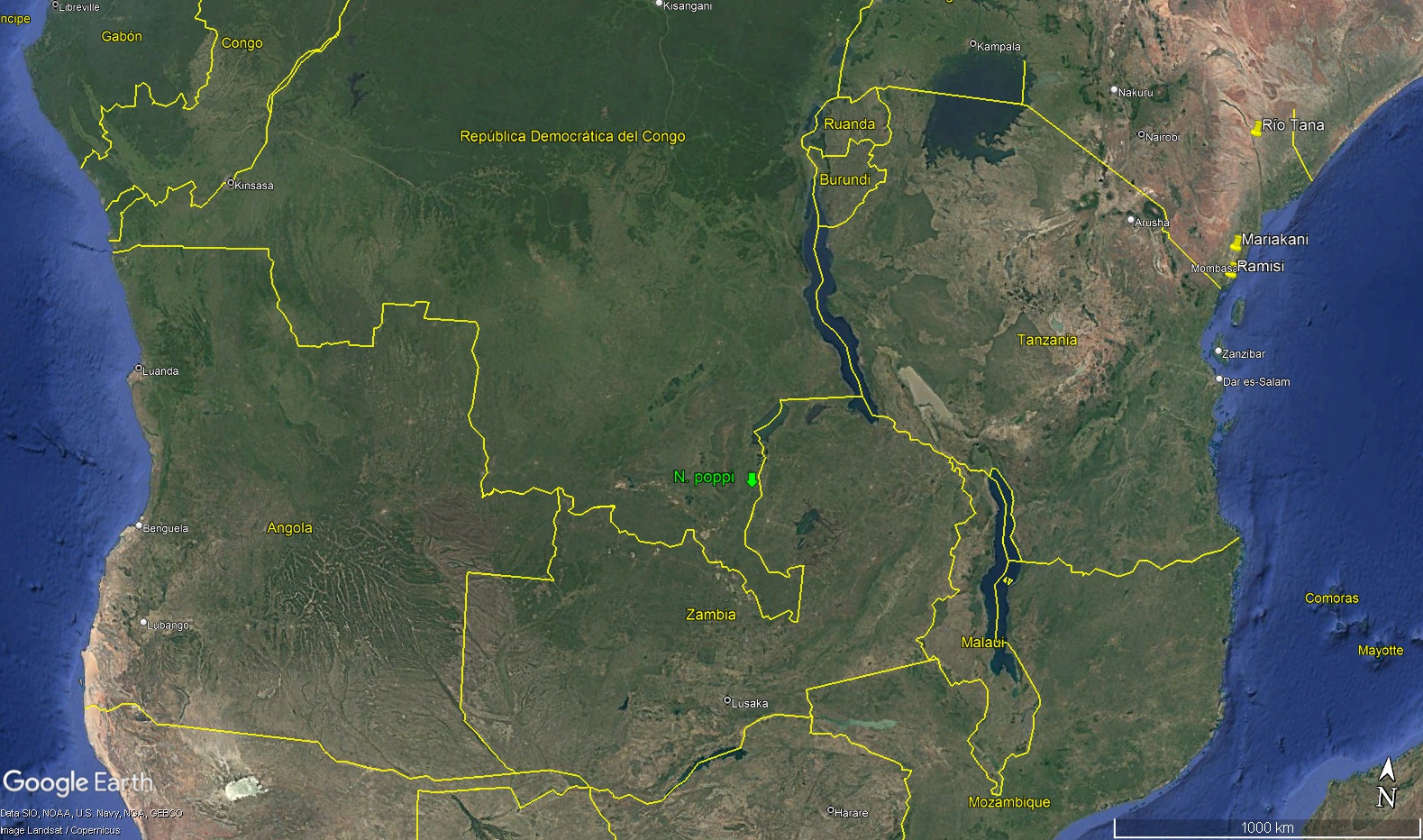
Type locality: 25 km southwest Kasenga township, lower Luapula
drainage, Lubi river system, {Katanga province}, (DR Congo)10°31.2’ S,
28°27.3’ E
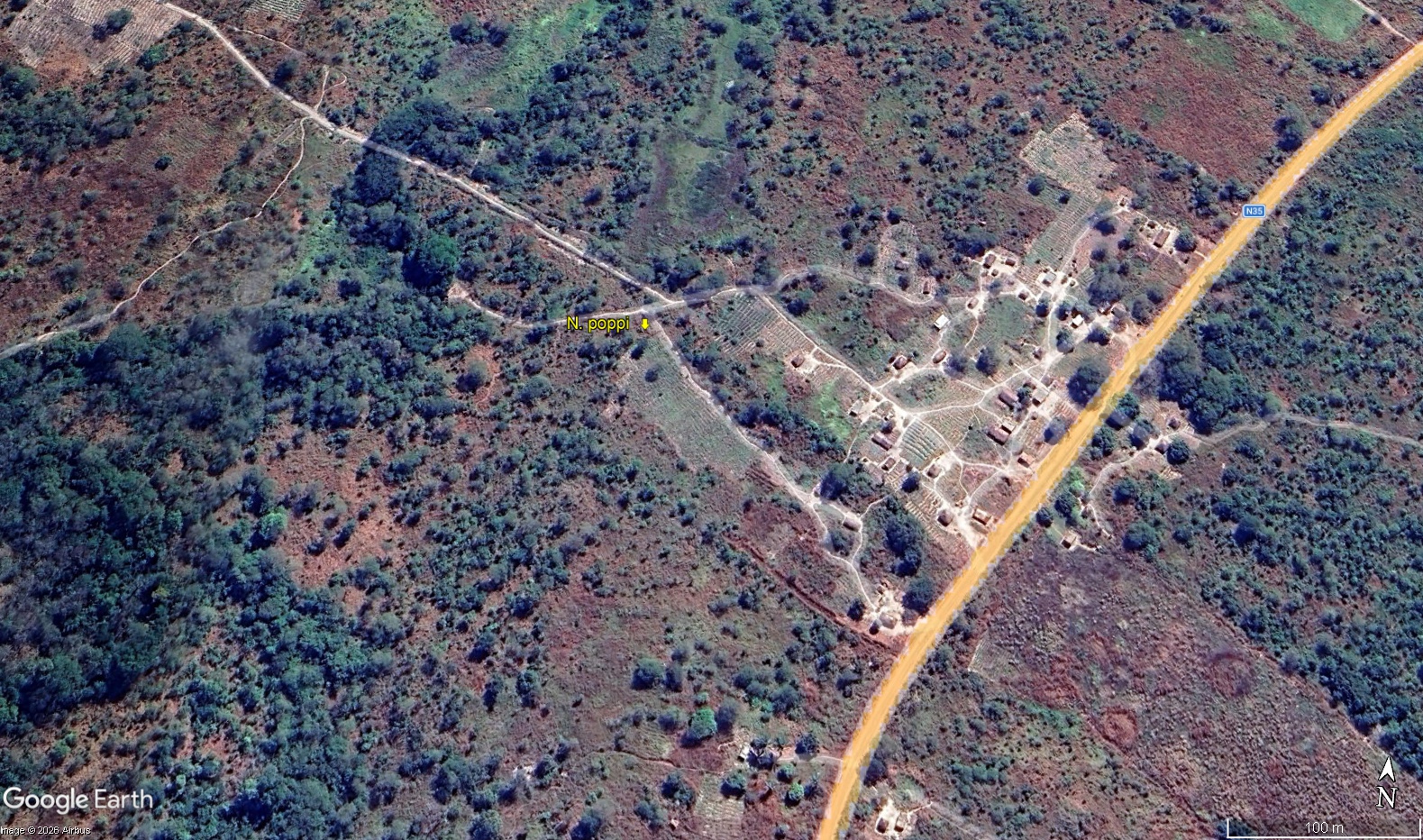
Locations/codes
Kasanga DRCP 13-6
Kasanga CD 16-20
Notes
Discoverer(s): Thomas Popp, A. Chocha Manda, E. Abwe y Bauchet
Katemo Manda, 17 de abril. 2013.
Status specie: No accepted by all authors.
In captivity : Very rare or currently absent in captivity. There is a
documented record of aquarium maintenance by its discoverer, Thomas
Popp, but without any specific details.
Molecularly, it is very closely related to N. malaissei, a species with which it
also shows considerable morphological similarity. Its maintenance
requirements should not differ greatly from those of N. malaissei and N. sp.
Lubi (still unassigned).
Variability: Unknown
Bibliography
Popp, T. 2015. Der Upemba Nationalpark. D.K.G. (Deutsche Killifisch
Gemeinschaft) Journal, 47: 29-35, figs. [poppi N.: Coll/Dis/as sp. Kazanga]
Nagy, B. 2025. Review of cyprinodontiform fishes in the upper Congo
drainage with descriptions of four new species of seasonal Nothobranchius
(Nothobranchiidae) and a new species of ‘Lacustricola’ Lampeye
(Procatopodidae) in South-Eastern DR Congo. Ecology and Diversity, 2
(2), 10006. [as Nothobranchius spec. from upper Lubi, phylogeny]



Nothobranchius poppi
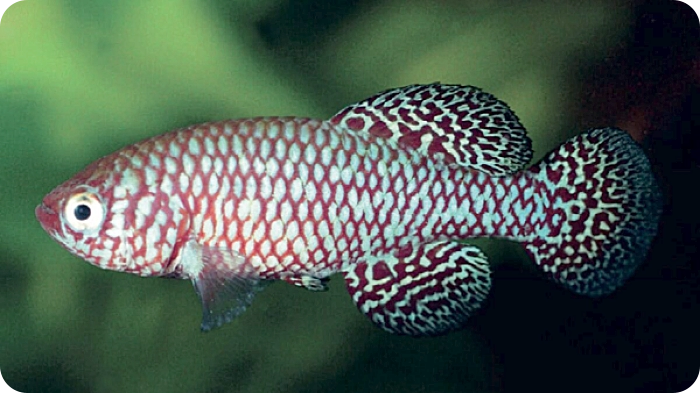
Nagy, Chocha Manda & Vreven, 2026